Buy photoshop-tutorials.be ?
We are moving the project
photoshop-tutorials.be .
Are you interested in purchasing the domain
photoshop-tutorials.be ?
domain@kv-gmbh.de · 0541-91531010
Buy photoshop-tutorials.be ?
When do you conjugate "avoir"?
The verb "avoir" is conjugated when talking about possession or to form compound tenses such as the passé composé. In these cases, "avoir" is conjugated according to the subject of the sentence. For example, "J'ai un chat" (I have a cat) or "Nous avons mangé" (We have eaten). **
How do you conjugate falloir?
The verb "falloir" is an impersonal verb, meaning it is only used in the third person singular. It is conjugated as "il faut" in the present tense, "il fallait" in the imperfect tense, and "il faudra" in the future tense. There is no need to conjugate it for different subjects, as it always remains in the third person singular form. **


Similar search terms for Conjugate
Top-Angebote
Products related to Conjugate:
-
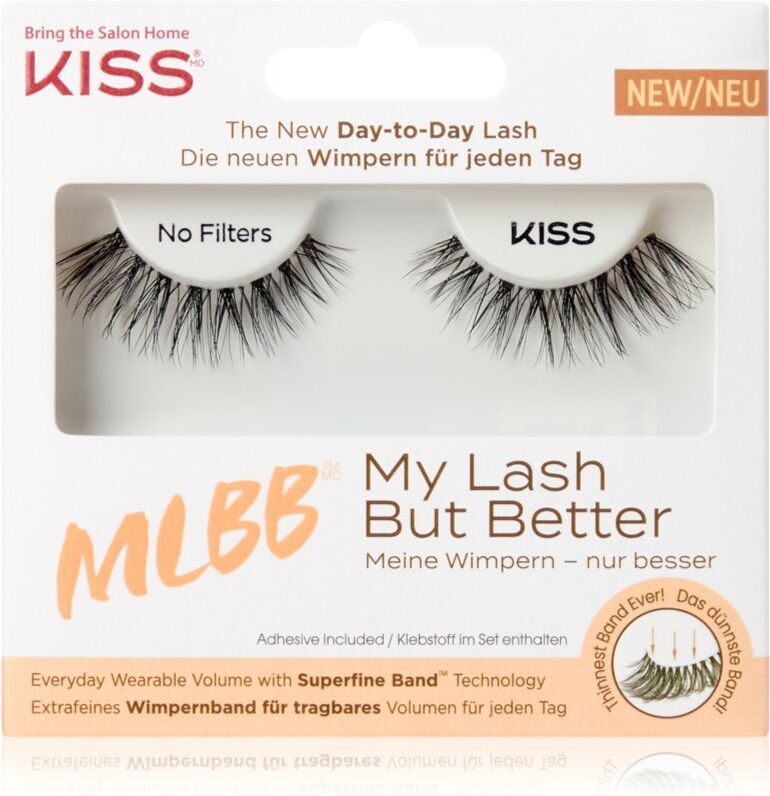
Kiss My Lash But Better faux-cils 02 No Filters 1 une paire deKISS My Lash But Better, 1 pair, Faux-cils pour femme, Vous souhaitez donner une nouvelle dimension à votre maquillage avec une frange de cils démultipliée et vous sentir vraiment unique ? Les faux cils KISS My Lash But Better intensifieront votre regard à tel point que vos yeux seront au centre de l’attention. Vous pourrez ainsi facilement et rapidement obtenir le regard lumineux et intensifié que vous souhaitez, sans avoir à appliquer de multiples couches de mascara ou à vous rendre dans un salon d’extension de cils. Le produit : conviennent pour un usage quotidien attachés à une fine bande adhésive transparente fournis avec de la colle les cils paraissent immédiatement plus longs et plus volumineux Mode d’emploi : Vous pouvez couper les faux-cils pour leur donner la longueur souhaitée en fonction de la taille de vos yeux. Appliquez de la colle sur la bande, laissez-la sécher quelques instants et collez-la sur la paupière, le plus près possible de vos cils.6,66 €*Shipping: 3,45 €Secure redirect to the provider
-
Revlon Professional Nutri Color Filters Metal-Ice masque colorant nourrissant à usage professionnel 100 mlRevlon Professional Nutri Color Filters Metal-Ice, 100 ml, Colorations semi-permanentes cheveux pour femme, Le produit : offre une belle brillance aux cheveux couleur vibrante et pleine de reflets20,90 €*Shipping: 3,45 €Secure redirect to the provider
-
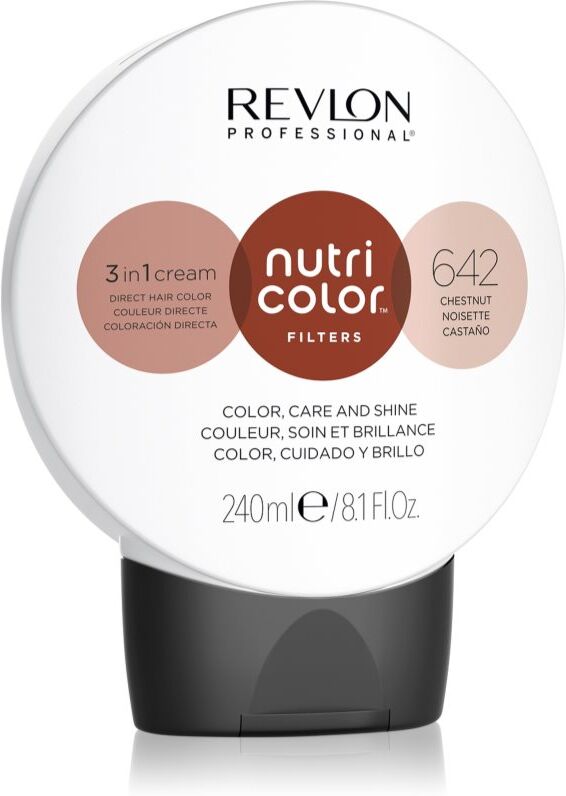
Revlon Professional Nutri Color Filters Toning masque colorant nourrissant à usage professionnel 642 240 mlRevlon Professional Nutri Color Filters Toning, 240 ml, Colorations semi-permanentes cheveux pour femme, Le produit : nourrit et adoucit vos cheveux couleur vibrante et pleine de reflets Mode d’emploi : Pour usage professionnel uniquement. Laissez agir pendant toute la durée indiquée sur l’emballage, puis rincez abondamment.24,51 €*Shipping: 3,45 €Secure redirect to the provider
-
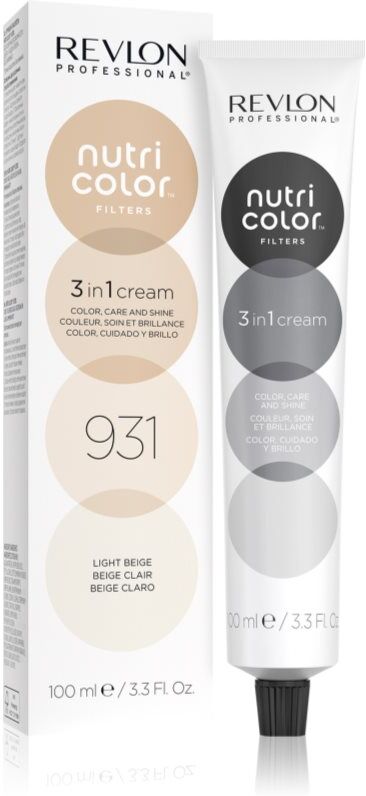
Revlon Professional Nutri Color Filters Toning masque colorant nourrissant à usage professionnel 931 100 mlRevlon Professional Nutri Color Filters Toning, 100 ml, Colorations semi-permanentes cheveux pour femme, Le produit : nourrit et adoucit vos cheveux couleur vibrante et pleine de reflets Mode d’emploi : Pour usage professionnel uniquement. Laissez agir pendant toute la durée indiquée sur l’emballage, puis rincez abondamment.17,57 €*Shipping: 3,45 €Secure redirect to the provider
-
How do you conjugate French adjectives?
In French, adjectives must agree in gender (masculine or feminine) and number (singular or plural) with the noun they modify. To conjugate a French adjective, you need to add the appropriate ending to match the gender and number of the noun it describes. For example, to make the adjective "petit" (small) agree with a masculine singular noun, you would use "petit." But if the noun is feminine singular, you would use "petite." And for a masculine plural noun, you would use "petits," and for a feminine plural noun, you would use "petites." **
-
How do you conjugate in Hebrew?
In Hebrew, verbs are conjugated based on the subject of the sentence and the tense of the action. There are different conjugation patterns for each tense (past, present, future) and for each subject (I, you, he/she/it, we, you all, they). The verb root remains the same, but the conjugation changes to match the subject and tense. Additionally, Hebrew verbs also change based on gender and number of the subject. Learning the conjugation patterns and practicing with different verbs is essential for mastering Hebrew verb conjugation. **
-
Can you help me conjugate avoir?
Sure! The verb "avoir" is conjugated as follows: - J'ai (I have) - Tu as (You have) - Il/Elle/On a (He/She/One has) - Nous avons (We have) - Vous avez (You have) - Ils/Elles ont (They have) **
-
How do you conjugate in French?
In French, verbs are conjugated to match the subject of the sentence, including the person (I, you, he/she, we, they) and the tense (present, past, future, etc.). To conjugate a regular verb in the present tense, you remove the infinitive ending (-er, -ir, -re) and add the appropriate ending for the subject (je, tu, il/elle, nous, vous, ils/elles). For example, for the verb "parler" (to speak), you would conjugate it as "je parle" (I speak), "tu parles" (you speak), "il/elle parle" (he/she speaks), "nous parlons" (we speak), "vous parlez" (you speak), "ils/elles parlent" (they speak). Irregular verbs have their own unique conjugation patterns that need to be memorized. **

How do you conjugate the Passé Composé?
To conjugate the Passé Composé in French, you typically use the auxiliary verb "avoir" or "être" followed by the past participle of the main verb. The choice between "avoir" and "être" depends on the verb being used and whether it is a transitive or intransitive verb. The past participle of regular -er verbs is formed by replacing the -er ending with -é, for -ir verbs you replace the -ir ending with -i, and for -re verbs you replace the -re ending with -u. Irregular verbs have unique past participle forms that need to be memorized. **
How do you conjugate something life-threatening?
When conjugating something life-threatening, it is important to use appropriate language and tone to convey the seriousness of the situation. This can involve using strong verbs and descriptive language to emphasize the severity of the threat. It is also important to provide clear and concise information about the potential risks and consequences associated with the life-threatening situation. Additionally, it is crucial to offer guidance on how to address or mitigate the threat to ensure the safety and well-being of those involved. **
Top-Angebote
Products related to Conjugate:
-
George Karelias and Sons Oriental Filters - 1 cartouche (10x20)Cigarettes George Karelias and Sons Oriental Filters, produites par la Karelia Tobacco Company à Kalamata, Grèce. Fabricant de cigarettes et tabacs depuis 1888.George Karelias and Sons est une marque de la Karelia Tobacco Company, établie à Kalamata, en Grèce. Cette manufacture produit des cigarettes et des tabacs depuis 1888. Cigarettes de type oriental avec filtre, commercialisées sous la marque George Karelias and Sons. Produites par la Karelia Tobacco Company, Kalamata, Grèce. Type de produit Cigarettes avec filtre oriental. Produit du tabac destiné aux adultes.80,00 €*Shipping: 8,95 €Secure redirect to the provider
-
Aveda Beautifying Composition Oil huile sublimatrice pour le bain pour visage et corps 50 mlAveda Beautifying Composition Oil, 50 ml, Huiles de bains pour femme, Vous avez l’impression que votre lait ou votre crème ne suffit pas à combler les besoins de votre peau ? L’huile pour le corps Aveda Beautifying Composition Oil complète idéalement n’importe quelle routine de soins. Elle fournit à la peau une bonne dose de nutriments, tout en contribuant à sa régénération et en l’adoucissant. Le produit : hydrate en profondeur s’absorbe facilement ralentit le vieillissement laisse la peau du corps parfaitement soyeuse Composition du produit : produit végétalien Mode d’emploi : Suivez les instructions du manuel joint.26,60 €*Shipping: 3,45 €Secure redirect to the provider
-
Kiss My Lash But Better faux-cils 02 No Filters 1 une paire deKISS My Lash But Better, 1 pair, Faux-cils pour femme, Vous souhaitez donner une nouvelle dimension à votre maquillage avec une frange de cils démultipliée et vous sentir vraiment unique ? Les faux cils KISS My Lash But Better intensifieront votre regard à tel point que vos yeux seront au centre de l’attention. Vous pourrez ainsi facilement et rapidement obtenir le regard lumineux et intensifié que vous souhaitez, sans avoir à appliquer de multiples couches de mascara ou à vous rendre dans un salon d’extension de cils. Le produit : conviennent pour un usage quotidien attachés à une fine bande adhésive transparente fournis avec de la colle les cils paraissent immédiatement plus longs et plus volumineux Mode d’emploi : Vous pouvez couper les faux-cils pour leur donner la longueur souhaitée en fonction de la taille de vos yeux. Appliquez de la colle sur la bande, laissez-la sécher quelques instants et collez-la sur la paupière, le plus près possible de vos cils.6,66 €*Shipping: 3,45 €Secure redirect to the provider
-
Revlon Professional Nutri Color Filters Metal-Ice masque colorant nourrissant à usage professionnel 100 mlRevlon Professional Nutri Color Filters Metal-Ice, 100 ml, Colorations semi-permanentes cheveux pour femme, Le produit : offre une belle brillance aux cheveux couleur vibrante et pleine de reflets20,90 €*Shipping: 3,45 €Secure redirect to the provider
-
When do you conjugate "avoir"?
The verb "avoir" is conjugated when talking about possession or to form compound tenses such as the passé composé. In these cases, "avoir" is conjugated according to the subject of the sentence. For example, "J'ai un chat" (I have a cat) or "Nous avons mangé" (We have eaten). **
-
How do you conjugate falloir?
The verb "falloir" is an impersonal verb, meaning it is only used in the third person singular. It is conjugated as "il faut" in the present tense, "il fallait" in the imperfect tense, and "il faudra" in the future tense. There is no need to conjugate it for different subjects, as it always remains in the third person singular form. **
-
How do you conjugate French adjectives?
In French, adjectives must agree in gender (masculine or feminine) and number (singular or plural) with the noun they modify. To conjugate a French adjective, you need to add the appropriate ending to match the gender and number of the noun it describes. For example, to make the adjective "petit" (small) agree with a masculine singular noun, you would use "petit." But if the noun is feminine singular, you would use "petite." And for a masculine plural noun, you would use "petits," and for a feminine plural noun, you would use "petites." **
-
How do you conjugate in Hebrew?
In Hebrew, verbs are conjugated based on the subject of the sentence and the tense of the action. There are different conjugation patterns for each tense (past, present, future) and for each subject (I, you, he/she/it, we, you all, they). The verb root remains the same, but the conjugation changes to match the subject and tense. Additionally, Hebrew verbs also change based on gender and number of the subject. Learning the conjugation patterns and practicing with different verbs is essential for mastering Hebrew verb conjugation. **
Similar search terms for Conjugate
-
Revlon Professional Nutri Color Filters Toning masque colorant nourrissant à usage professionnel 642 240 mlRevlon Professional Nutri Color Filters Toning, 240 ml, Colorations semi-permanentes cheveux pour femme, Le produit : nourrit et adoucit vos cheveux couleur vibrante et pleine de reflets Mode d’emploi : Pour usage professionnel uniquement. Laissez agir pendant toute la durée indiquée sur l’emballage, puis rincez abondamment.24,51 €*Shipping: 3,45 €Secure redirect to the provider
-
Revlon Professional Nutri Color Filters Toning masque colorant nourrissant à usage professionnel 931 100 mlRevlon Professional Nutri Color Filters Toning, 100 ml, Colorations semi-permanentes cheveux pour femme, Le produit : nourrit et adoucit vos cheveux couleur vibrante et pleine de reflets Mode d’emploi : Pour usage professionnel uniquement. Laissez agir pendant toute la durée indiquée sur l’emballage, puis rincez abondamment.17,57 €*Shipping: 3,45 €Secure redirect to the provider
-
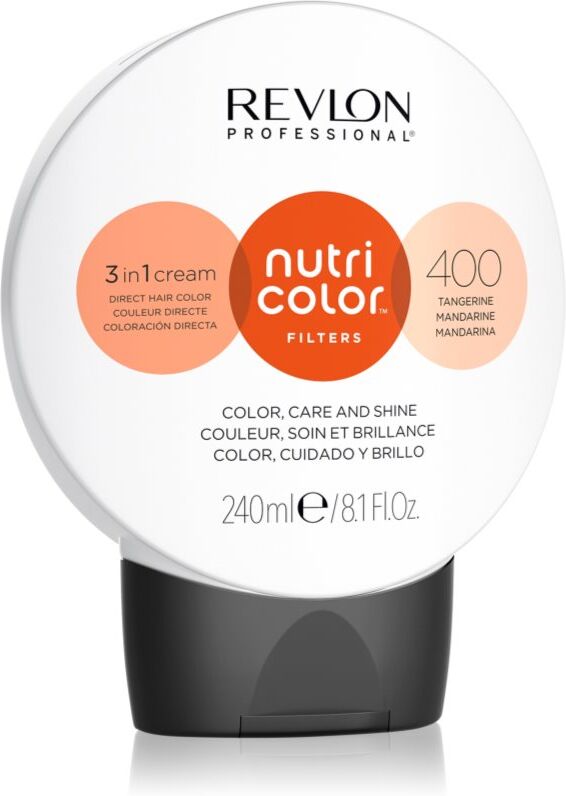
Revlon Professional Nutri Color Filters Fashion masque colorant nourrissant à usage professionnel 400 240 mlRevlon Professional Nutri Color Filters Fashion, 240 ml, Colorations semi-permanentes cheveux pour femme, Le produit : offre une belle brillance aux cheveux nourrit et adoucit vos cheveux doux pour les cheveux donne aux cheveux une subtile touche de couleur tient entre 4 et 6 semaines Mode d’emploi : Pour usage professionnel uniquement. Laissez agir pendant toute la durée indiquée sur l’emballage, puis rincez abondamment.13,68 €*Shipping: 3,45 €Secure redirect to the provider
-
Revlon Professional Nutri Color Filters Toning masque colorant nourrissant à usage professionnel 730 100 mlRevlon Professional Nutri Color Filters Toning, 100 ml, Colorations semi-permanentes cheveux pour femme, Le produit : nourrit et adoucit vos cheveux couleur vibrante et pleine de reflets Mode d’emploi : Pour usage professionnel uniquement. Laissez agir pendant toute la durée indiquée sur l’emballage, puis rincez abondamment.20,90 €*Shipping: 3,45 €Secure redirect to the provider
-
Can you help me conjugate avoir?
Sure! The verb "avoir" is conjugated as follows: - J'ai (I have) - Tu as (You have) - Il/Elle/On a (He/She/One has) - Nous avons (We have) - Vous avez (You have) - Ils/Elles ont (They have) **
-
How do you conjugate in French?
In French, verbs are conjugated to match the subject of the sentence, including the person (I, you, he/she, we, they) and the tense (present, past, future, etc.). To conjugate a regular verb in the present tense, you remove the infinitive ending (-er, -ir, -re) and add the appropriate ending for the subject (je, tu, il/elle, nous, vous, ils/elles). For example, for the verb "parler" (to speak), you would conjugate it as "je parle" (I speak), "tu parles" (you speak), "il/elle parle" (he/she speaks), "nous parlons" (we speak), "vous parlez" (you speak), "ils/elles parlent" (they speak). Irregular verbs have their own unique conjugation patterns that need to be memorized. **
-
How do you conjugate the Passé Composé?
To conjugate the Passé Composé in French, you typically use the auxiliary verb "avoir" or "être" followed by the past participle of the main verb. The choice between "avoir" and "être" depends on the verb being used and whether it is a transitive or intransitive verb. The past participle of regular -er verbs is formed by replacing the -er ending with -é, for -ir verbs you replace the -ir ending with -i, and for -re verbs you replace the -re ending with -u. Irregular verbs have unique past participle forms that need to be memorized. **
-
How do you conjugate something life-threatening?
When conjugating something life-threatening, it is important to use appropriate language and tone to convey the seriousness of the situation. This can involve using strong verbs and descriptive language to emphasize the severity of the threat. It is also important to provide clear and concise information about the potential risks and consequences associated with the life-threatening situation. Additionally, it is crucial to offer guidance on how to address or mitigate the threat to ensure the safety and well-being of those involved. **
* All prices are inclusive of VAT and, if applicable, plus shipping costs. The offer information is based on the details provided by the respective shop and is updated through automated processes. Real-time updates do not occur, so deviations can occur in individual cases. ** Note: Parts of this content were created by AI.