Buy photoshop-tutorials.be ?
We are moving the project
photoshop-tutorials.be .
Are you interested in purchasing the domain
photoshop-tutorials.be ?
domain@kv-gmbh.de · 0541-91531010
Buy photoshop-tutorials.be ?
What is the correct conjugation?
The correct conjugation of a verb depends on the subject of the sentence and the tense being used. In English, regular verbs typically follow a pattern of adding -ed to form the past tense (e.g., walk becomes walked). Irregular verbs, on the other hand, have unique conjugations that do not follow a set pattern (e.g., go becomes went). It is important to pay attention to the subject of the sentence and the tense being used in order to correctly conjugate a verb. **
What conjugation does "dare" have?
"Dare" is a regular verb in Italian and belongs to the second conjugation. In the present tense, it is conjugated as follows: io do, tu dai, lui/lei dà, noi diamo, voi date, loro danno. **

Similar search terms for Conjugation
Top-Angebote
Products related to Conjugation:
-
What is conjugation in German?
Conjugation in German refers to the process of changing the form of a verb to match the subject of the sentence. This means that the verb will have different endings depending on whether the subject is "I," "you," "he/she/it," "we," or "they." Conjugation is an important aspect of German grammar as it helps to indicate who is performing the action in a sentence. It is essential for learners of German to understand how to conjugate verbs in order to communicate effectively in the language. **
-
How do I distinguish between the verbs of the E-conjugation and the consonant conjugation?
In Old Norse, the E-conjugation verbs typically end in -a in the infinitive form, while the consonant conjugation verbs end in -a, -i, or -u. Additionally, the E-conjugation verbs have a stem vowel that changes between the present and past tense, while the consonant conjugation verbs have a stem vowel that remains the same. It is also important to note that there are irregular verbs in both conjugations that do not follow these patterns. Therefore, it is important to study and memorize the specific conjugation patterns for each verb. **
-
What does the consonantal conjugation mean?
Consonantal conjugation is a grammatical feature found in Semitic languages, where the root of a verb consists of consonants only, and the vowels are added to indicate different tenses, moods, and aspects. This type of conjugation is characterized by changes in the vowels within the root consonants to convey different meanings. Consonantal conjugation allows for a high degree of flexibility and complexity in verb forms, making it a key feature of Semitic language grammar. **
-
What is the conjugation in German?
Conjugation in German refers to changing the form of a verb to match the subject of a sentence. This means adjusting the verb's ending based on the person (I, you, he/she/it, we, you all, they) and tense (present, past, future). German verbs can have different conjugations depending on these factors, making it important to learn the various verb forms to communicate accurately in the language. **
Is there a language without conjugation?
Yes, there are languages without conjugation. For example, Chinese is a language that does not have verb conjugation. In Chinese, verbs remain the same regardless of the subject or tense. Instead, time expressions or context are used to indicate when an action took place. **
What is the conjugation for French adjectives?
In French, adjectives must agree in gender (masculine/feminine) and number (singular/plural) with the noun they describe. To conjugate an adjective, you add an -e for feminine and an -s for plural. For example, the adjective "petit" (small) would become "petite" in its feminine form and "petits" in its plural form. **
Top-Angebote
Products related to Conjugation:
-
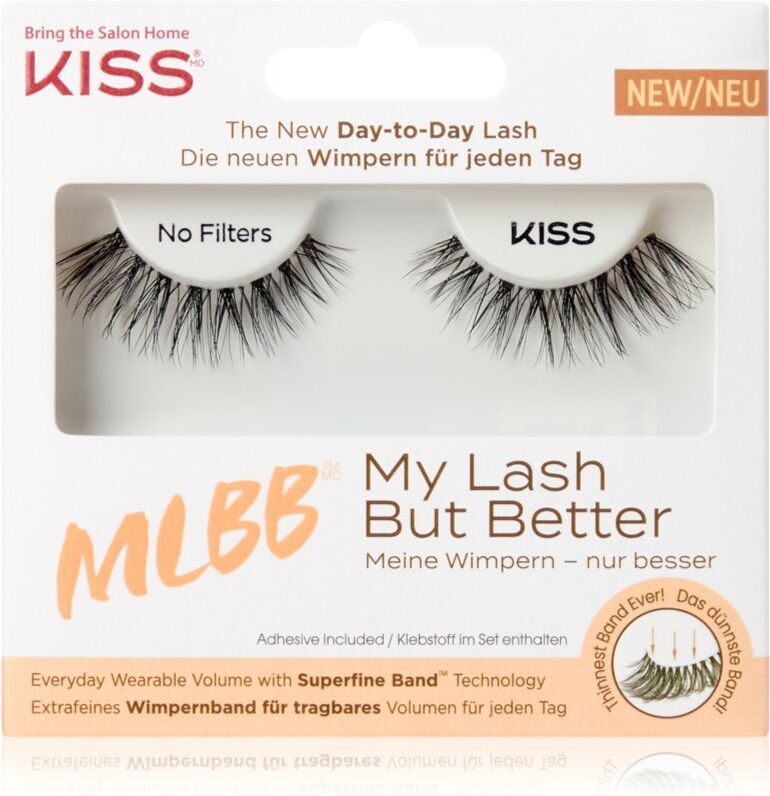
Kiss My Lash But Better faux-cils 02 No Filters 1 une paire deKISS My Lash But Better, 1 pair, Faux-cils pour femme, Vous souhaitez donner une nouvelle dimension à votre maquillage avec une frange de cils démultipliée et vous sentir vraiment unique ? Les faux cils KISS My Lash But Better intensifieront votre regard à tel point que vos yeux seront au centre de l’attention. Vous pourrez ainsi facilement et rapidement obtenir le regard lumineux et intensifié que vous souhaitez, sans avoir à appliquer de multiples couches de mascara ou à vous rendre dans un salon d’extension de cils. Le produit : conviennent pour un usage quotidien attachés à une fine bande adhésive transparente fournis avec de la colle les cils paraissent immédiatement plus longs et plus volumineux Mode d’emploi : Vous pouvez couper les faux-cils pour leur donner la longueur souhaitée en fonction de la taille de vos yeux. Appliquez de la colle sur la bande, laissez-la sécher quelques instants et collez-la sur la paupière, le plus près possible de vos cils.6,66 €*Shipping: 3,45 €Secure redirect to the provider
-
Revlon Professional Nutri Color Filters Metal-Ice masque colorant nourrissant à usage professionnel 100 mlRevlon Professional Nutri Color Filters Metal-Ice, 100 ml, Colorations semi-permanentes cheveux pour femme, Le produit : offre une belle brillance aux cheveux couleur vibrante et pleine de reflets20,90 €*Shipping: 3,45 €Secure redirect to the provider
-
What is the correct conjugation?
The correct conjugation of a verb depends on the subject of the sentence and the tense being used. In English, regular verbs typically follow a pattern of adding -ed to form the past tense (e.g., walk becomes walked). Irregular verbs, on the other hand, have unique conjugations that do not follow a set pattern (e.g., go becomes went). It is important to pay attention to the subject of the sentence and the tense being used in order to correctly conjugate a verb. **
-
What conjugation does "dare" have?
"Dare" is a regular verb in Italian and belongs to the second conjugation. In the present tense, it is conjugated as follows: io do, tu dai, lui/lei dà, noi diamo, voi date, loro danno. **
-
What is conjugation in German?
Conjugation in German refers to the process of changing the form of a verb to match the subject of the sentence. This means that the verb will have different endings depending on whether the subject is "I," "you," "he/she/it," "we," or "they." Conjugation is an important aspect of German grammar as it helps to indicate who is performing the action in a sentence. It is essential for learners of German to understand how to conjugate verbs in order to communicate effectively in the language. **
-
How do I distinguish between the verbs of the E-conjugation and the consonant conjugation?
In Old Norse, the E-conjugation verbs typically end in -a in the infinitive form, while the consonant conjugation verbs end in -a, -i, or -u. Additionally, the E-conjugation verbs have a stem vowel that changes between the present and past tense, while the consonant conjugation verbs have a stem vowel that remains the same. It is also important to note that there are irregular verbs in both conjugations that do not follow these patterns. Therefore, it is important to study and memorize the specific conjugation patterns for each verb. **
Similar search terms for Conjugation
-
What does the consonantal conjugation mean?
Consonantal conjugation is a grammatical feature found in Semitic languages, where the root of a verb consists of consonants only, and the vowels are added to indicate different tenses, moods, and aspects. This type of conjugation is characterized by changes in the vowels within the root consonants to convey different meanings. Consonantal conjugation allows for a high degree of flexibility and complexity in verb forms, making it a key feature of Semitic language grammar. **
-
What is the conjugation in German?
Conjugation in German refers to changing the form of a verb to match the subject of a sentence. This means adjusting the verb's ending based on the person (I, you, he/she/it, we, you all, they) and tense (present, past, future). German verbs can have different conjugations depending on these factors, making it important to learn the various verb forms to communicate accurately in the language. **
-
Is there a language without conjugation?
Yes, there are languages without conjugation. For example, Chinese is a language that does not have verb conjugation. In Chinese, verbs remain the same regardless of the subject or tense. Instead, time expressions or context are used to indicate when an action took place. **
-
What is the conjugation for French adjectives?
In French, adjectives must agree in gender (masculine/feminine) and number (singular/plural) with the noun they describe. To conjugate an adjective, you add an -e for feminine and an -s for plural. For example, the adjective "petit" (small) would become "petite" in its feminine form and "petits" in its plural form. **
* All prices are inclusive of VAT and, if applicable, plus shipping costs. The offer information is based on the details provided by the respective shop and is updated through automated processes. Real-time updates do not occur, so deviations can occur in individual cases. ** Note: Parts of this content were created by AI.